About · Norwood, Adelaide
What we are, and what we hold ourselves to.
You're deciding whether to hand your athlete to someone else for a couple of hours a week. That's a fair thing to be careful about. This page is what we'd want to know if it were ours.
What we actually are
An athletic development academy in Norwood. Not a room you turn up to and work out in on your own, and not a fitness class with a sports name on it. We start with athletes at eight, and we deliberately don't put a number on the other end. A growing share of the people training here now are past school, still competing, and still want someone programming for them properly.
Three academies, one road:
Foundations · around 8 to 13
The layer underneath everything. Stability, posture, mechanics and coordination, built in the window where they're built most easily and last the longest. Foundations →
Advanced · from around 13, and it doesn't stop at 18
Strength, speed, power and durability, programmed to the athlete's sport and where they are in their season. This is where most of our senior athletes sit too. Advanced Athlete Academy →
Individual Athlete Academy · by arrangement, any age
Your own program, written for you and updated as you progress. For the athlete whose sport, position or injury history means the group program isn't the right answer. It starts with a conversation, so we build the right thing rather than the obvious thing. Individual programming →
Athletes move between these when they're ready, not on a birthday. That judgement is the entire point of running three academies instead of one room with everybody in it.
The long view is the whole idea
We're not trying to make your athlete impressive in the gym. The gym is not where their season is decided, and a number on a board here means nothing on Saturday. Everything we program is aimed at the same thing: that they arrive at their sport more capable and more durable than they left it.
That means the work is often unglamorous, and it means progress is measured in years. An eleven-year-old learning to control their own body properly is doing the most valuable thing available to them, even though it looks like less than lifting something heavy. We'd rather be honest about that than sell you a faster version that doesn't exist.
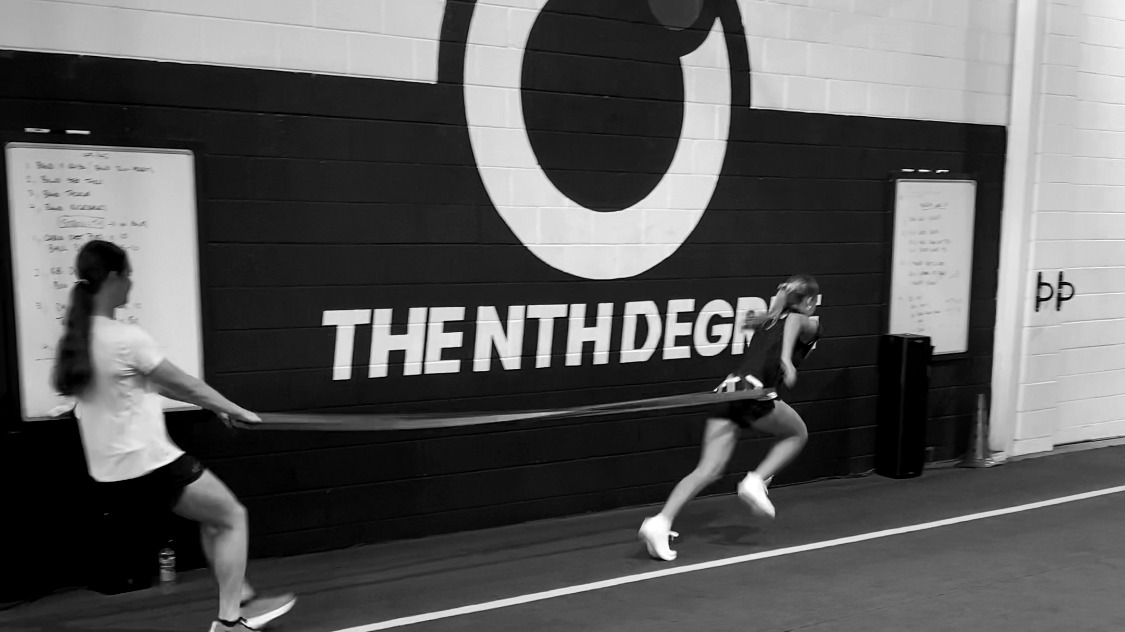
How we train a body that's still growing
Challenge, not maximum. Young athletes are growing, and we program with that in front of us rather than as a disclaimer. Technique and control before load, load earned over months, and their club and school week taken into account so our work lands around it instead of on top of it.
The thing most parents are actually asking is whether strength training will hurt their child. Coached properly and built progressively, it's one of the more protective things a young athlete can do. The risk sits the other way around: an untrained body trying to keep up with a sport that's getting faster every season.
What a session is actually shaped like
Group sessions run to the same architecture, and the order is the whole point. Switch the body on properly. Then the fast work, speed and jumping, while they're genuinely fresh, because that quality is worthless when it's done tired. Then strength. Then a short conditioning finish, last, because that's the piece that can afford to be done on an empty tank.
Most programs get this backwards and put the running at the end as a punishment. We'd rather spend an athlete's freshest fifteen minutes on the thing that actually makes them faster.
What changes between athletes isn't the architecture, it's the emphasis. A footballer already runs twelve or more kilometres in a game, so we lean off the conditioning and load the things their sport doesn't give them. A swimmer gets the opposite treatment. That's the judgement you're paying for.
The room, and the standard in it
Nobody gets screamed at, ranked against the athlete next to them, or made to feel like they don't belong. The standard in the room is high and it's held by the people already in it, which is a completely different thing from pressure applied from the front. Young athletes carry enough of that in their sport already.
We coach the athlete and the young person at the same time, because at these ages you can't separate them.
Who's in the room
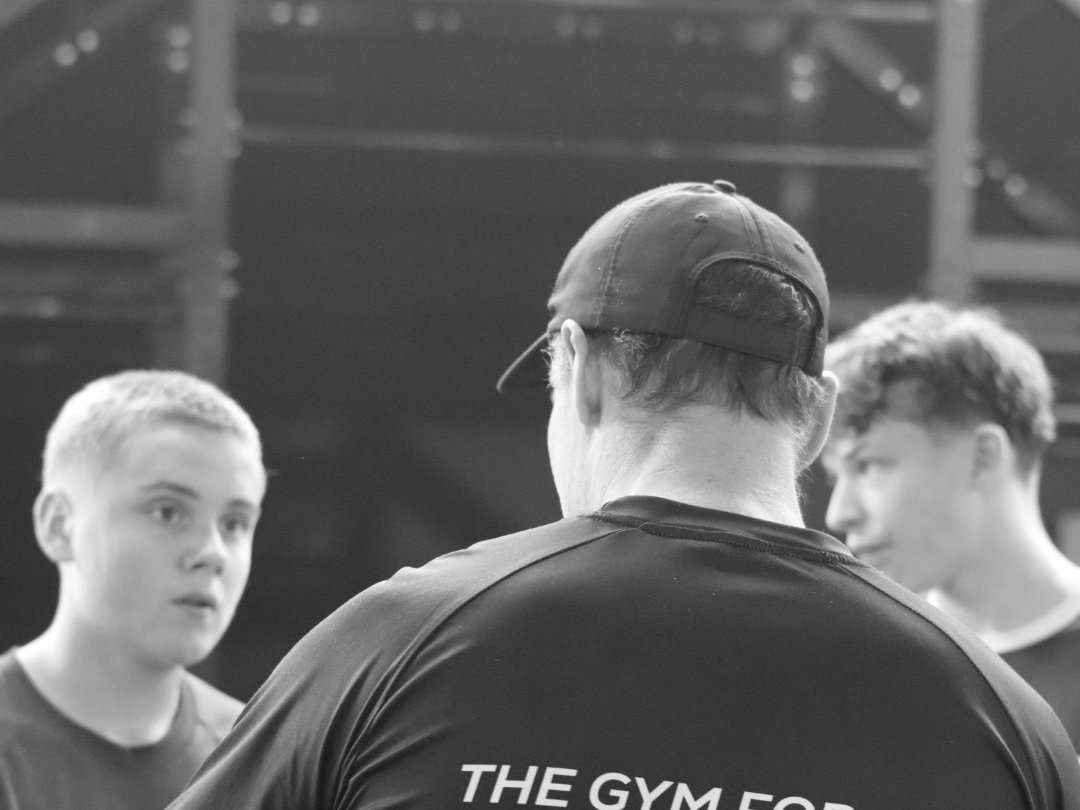
The coaches here competed at the top of their own sports, and they've stood where your athlete is standing. That matters less as a credential than as a reason they can tell the difference between an athlete who needs pushing and one who needs backing off. Meet the coaches →
What the long view has looked like
Four athletes who trained in this room have gone on to the WNBA, the AFL, the Hockeyroos and the WNBL. We didn't make them. Their clubs, their coaches and their families did most of it, and we'd rather say that than the other version. What we did was build the base underneath and keep them on the floor while they got good. See where athletes have gone →
What we'll tell you
The truth about your athlete, including when it isn't what you were hoping for. If they're not ready for the next academy, we'll say so. If they need something we don't do, we'll say that. If we think a session should be pulled because of how they've turned up, we'll pull it and tell you why.
We'd rather lose a booking than keep one by telling a parent what they wanted to hear.
Where: 32 Magill Road, Norwood SA 5067
Academies: Foundations (8–13) · Advanced (13+) · Individual (any age)
Talk to us: 0485 025 265
Questions parents ask us
Who will actually be coaching my athlete?
People who have competed at the level your athlete is aiming at, not casual staff rostered on for the hour. It's a small coaching group and they work across all three academies, so your athlete gets known rather than re-met. Bryan oversees the programming. You can see who they are and what they've done on our coaches page.
How do you decide what's safe to load onto a growing body?
Technique and control come first, and they stay first. Load is earned over months rather than added because an athlete asked for it, and it moves with their season, so a footballer deep in a finals run is not doing the week they did in December. Where an athlete is in their own growth matters more than what their training partner is lifting, and that is a judgement their coach makes in the room, every session.
What happens if my athlete turns up sore, or gets injured at sport?
Tell us and we'll adjust the session, not send them home. Most of the time the work gets changed rather than cancelled, and we'll work alongside whoever is treating them rather than around them. If we think they shouldn't be training that day, we'll say so, and we'll tell you why.
Do you only train school-age athletes?
No, and that's changed a lot. Foundations and Advanced are grouped by stage rather than strictly by age, and there's no point at which an athlete is too old for us. A growing number of the people training here are out of school and still competing, and some of them are on individual programming rather than in a group. If you're past school age and looking for someone to program properly for your sport, that's a normal conversation for us, not an exception.
What's the difference between the group academies and individual programming?
The group academies build the qualities every athlete needs, and the room itself does a lot of the work. Individual programming is for when that isn't the right answer: an unusual sport, a specific position, an injury history that needs working around, or a competition calendar that doesn't fit a group block. It starts with a conversation rather than a sign-up, because there's no point writing a program before we understand what it has to do. Both live on our memberships page.
How long do athletes usually stay?
Years, not terms. Most of the athletes we're proudest of trained here two to four years, two or three sessions a week alongside their sport. Nothing on our alumni page happened in a school term.
What if this isn't the right place for my athlete?
Then we'll tell you, and we'd rather tell you early. If they're too young for the Advanced floor they belong in Foundations. If they need something we don't do, we'll say that too. A trial session exists so both of us can find out before anyone commits.
Where are you, and who do I talk to?
32 Magill Road, Norwood SA 5067. Call 0485 025 265 or book a trial session and tell us about your athlete. That's the fastest way to get a straight answer about whether we're the right room.